
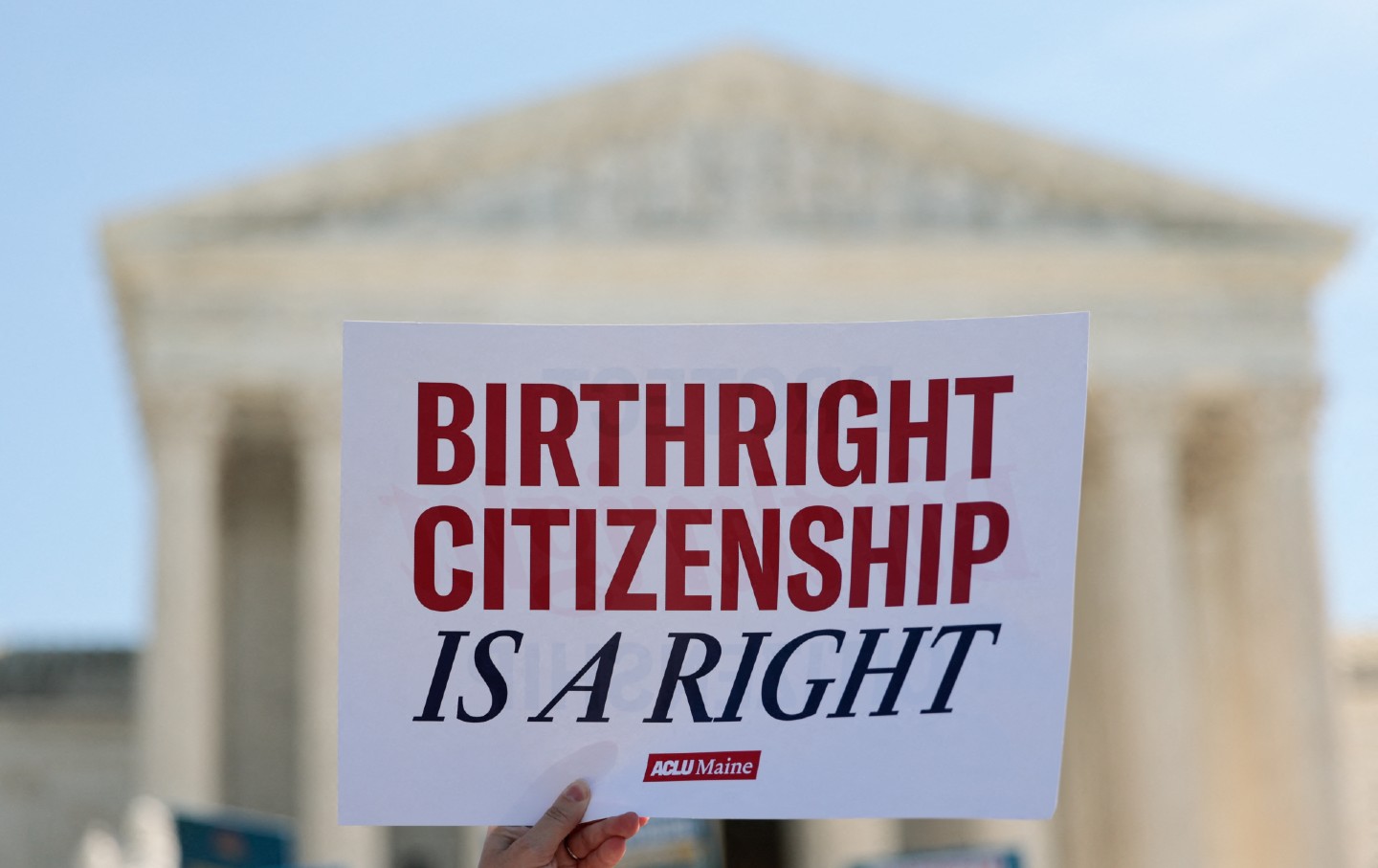
The Supreme Court held, 5–4, that children born in the United States to parents who are unlawfully or temporarily present are citizens at birth under the Fourteenth Amendment. Counting Justice Kavanaugh’s separate, statutory grounds concurrence in the judgment, the Court affirmed the nationwide injunction against Executive Order 14160 by a vote of 6–3. The rule that has governed since 1898 stands.
What happened
The Court affirmed the District Court and struck down Executive Order No. 14160, “Protecting the Meaning and Value of American Citizenship” (Jan. 20, 2025, 90 Fed. Reg. 8449), which had directed federal agencies to deny citizenship to children born in the United States to parents who are undocumented or present on temporary visas. Chief Justice Roberts, writing for a five-Justice majority joined by Justices Sotomayor, Kagan, Barrett, and Jackson, held that those children are “subject to the jurisdiction” of the United States and are citizens at birth under the Citizenship Clause. The Court grounded the result in the common-law rule of jus soli and in United States v. Wong Kim Ark, 169 U.S. 649 (1898), which it read as declaratory of that rule. The recognized exceptions remain narrow – children of foreign diplomats, and, historically, children born within sovereign tribal nations.
Two vote counts matter here, and they are not the same number. Five Justices – Roberts, Sotomayor, Kagan, Barrett, and Jackson – joined the constitutional holding that the Fourteenth Amendment itself guarantees birthright citizenship. Justice Kavanaugh did not join that holding; he concurred in the judgment and dissented in part, concluding that Executive Order 14160 is unlawful only because it conflicts with a federal statute, 8 U.S.C. §1401(a), and noting that Congress, not the Executive, could attempt to revisit the question by statute. Counting Justice Kavanaugh’s vote on the judgment (though not on the constitutional reasoning), the Order was struck down by a vote of 6–3. Justices Thomas and Alito each dissented separately; Justice Gorsuch joined Justice Thomas’s dissent. Since this is a decision of the Supreme Court, no further appeal is possible.
Why it matters
For employers and their foreign-national employees, the operative answer is the one that has always applied: a child born in the United States is a U.S. citizen at birth, regardless of the parents’ immigration status. That includes the children of employees on H-1B, L-1, O-1, TN, E-2, F-1, J-1, and every other nonimmigrant status. Executive Order 14160 never took effect. It was enjoined shortly after issuance and never implemented, so no client needs to change any practice because of this decision.
What the ruling delivers is clarity, and welcome relief to many foreign nationals who have wondered what the future would hold for their children. Since January 2025, employees and global-mobility teams have had to navigate conflicting coverage about the Order’s reach. That uncertainty is now resolved. HR and mobility teams can advise relocating employees and their families with confidence about the citizenship of a U.S.-born child, and about the routine steps that follow; specifically, passport and Social Security number issuance for their newborn.
What to watch
Nothing in this decision requires action. One thread remains open as a matter of law, not operations: Justice Kavanaugh’s concurrence frames the issue as one Congress could try to legislate. The constitutional holding forecloses an executive rewrite, and any future legislative effort would meet the same Fourteenth Amendment analysis the Court just applied. We will confirm that anticipatory agency guidance (USCIS, State Department passport processing, SSA) is unaffected and will advise if anything changes.
The rule is settled, and it is the rule employers have relied on for more than a century: born here, citizen here.
About This Alert
This alert was prepared by USILAW based on the slip opinion in Trump v. Barbara, No. 25-365 (U.S. June 30, 2026). It is intended for general informational purposes only and does not constitute legal advice. Immigration law is highly fact specific. Please contact your USILAW attorney regarding the application of this guidance to your organization’s specific circumstances.
Questions? Contact your USILAW attorney directly or reach us at: